


Value guide
Queen Victoria Stamp Values: What Are Victorian Stamps Worth?
Most Queen Victoria stamps are common and worth only a modest amount, because they were issued in vast numbers over a long reign, so a typical used Victorian stamp is inexpensive. Value rises with condition, scarcity and type: unused examples, scarce shades and plates, and the great high values such as the 1882 £5 Orange can be worth a great deal. As always, condition decides far more than age.


At a glance
Are Victorian stamps valuable?
For most examples, only modestly. Victoria reigned for over sixty years, and her stamps were printed in enormous numbers, so the great majority are common and inexpensive, especially used. That a stamp is Victorian does not make it valuable, as our guide to what affects a stamp's value explains.
But the reign also produced some of the most valuable stamps in British philately, and value can hide among the common run, so it is always worth identifying what you actually have.
What Victorian stamps are worth
As a rough guide, the common run of Victorian stamps is inexpensive. The 1d lilacs and similar everyday stamps are worth only a few pence, and most common Victorian stamps fall around £1 to £5. Unused Victorian stamps, being much scarcer, are worth more, often in the region of 5 to 10 per cent of their Stanley Gibbons catalogue value. The exceptions are the high values below.
Values are a guide only and depend on condition and the individual stamp.
The three kinds of Victorian stamp
Know which you have
Three kinds of Victorian stamp
Each is printed differently, and valued differently.
Line-engraved (1840 to about 1880)
The famous penny issues: the Penny Black, the Penny Red and the Twopenny Blue.
Embossed (1847 to 1854)
The handsome embossed high values, printed in relief and now scarce, especially with good margins.

Surface-printed (1855 to 1900)
The bulk of the reign, in many designs and values, including the great high values up to the £5 Orange.
The penny issues have guides of their own: see our Penny Black and Penny Red value guides.
The Victorian high values
The showpieces of the reign are the surface-printed high values. The 1882 £5 Orange is among the most striking of all British stamps, with fine examples typically from around £5,000 to £15,000 and up, while the £1 values run from around £80 for an average example to many thousands for the scarcer issues, and the 10s and 5s values are scarce and keenly collected. These are the Victorian stamps most likely to be worth a significant sum, particularly unused. Our guide to the most valuable GB stamps places them in context.
What decides a Victorian stamp's value
- Condition. Margins on the line-engraved, centring on the perforated, and overall freshness and soundness.
- Used or unused. Unused Victorian stamps are generally much scarcer, and worth more.
- Plate, corner letters and position. Especially on the penny issues.
- Shade. Victorian printings come in many shades, some scarce.
- Watermark and perforation. Varieties that distinguish a valuable stamp from a common one.
- Postmark. An unusual or fine cancellation can add value.
- Certification. For high values and any valuable example.
Beware fakes and repairs
Especially the high values
The better Victorian stamps attract forgeries, repairs, regumming and "improved" margins, and the high values especially so. For anything potentially valuable, buy from a reputable, accredited dealer and insist on a certificate. Our guides to our quality and grading standards and our accreditations explain how we protect buyers.
Buying or selling Victorian stamps
We describe every stamp fully, front and back, with condition plain to see, and the Victorian era is a core part of our stock. If you are selling, send clear photographs for a free, honest valuation.
Frequently asked questions
Most are common and modest in value, especially used. Value rises with condition, scarcity, shade and unused state, and the great high values can be worth a great deal.
No. Age does not decide value. The vast majority of Victorian stamps are common; a few are genuinely valuable. Condition and scarcity are what matter.
Among them the 1882 £5 Orange and the high-value £1 issues, along with rarities such as the Penny Red Plate 77.
Look at the printing: line-engraved penny issues, embossed high values, or the many surface-printed designs. Each is valued differently.
No. Never clean a stamp. It destroys value. Leave them as they are and have them assessed.
From the shop
Browse our Great Britain stamps
The Victorian era is a core part of our stock, each stamp fully described and photographed front and back.
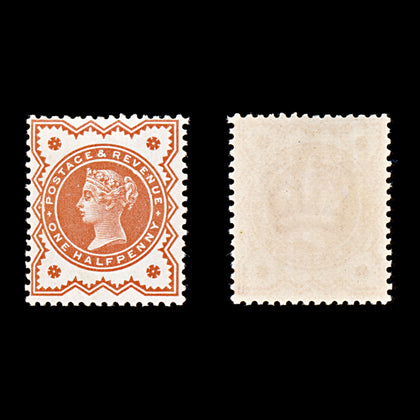
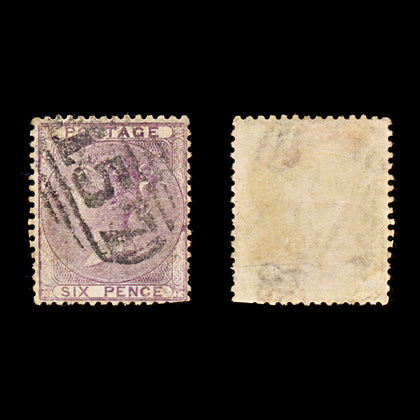
Sixty years of stamps, mostly common
Send photos for a free valuation
Email a free valuationBrowse Great Britain stamps Founder and stamp dealerLast updated June 2026