


Value guide
Penny Red Value: How Much Is a Penny Red Worth?
Most Penny Reds are very common and worth only a small amount, because they were printed in their billions. Value depends on which type you have, its condition, and above all its plate number: common plates are inexpensive, scarce plates are worth more, and the legendary Plate 77 is one of the most valuable stamps in the world. Imperforate Penny Reds with four good margins are generally worth more than the common perforated ones.


At a glance
Is a Penny Red valuable?
For most examples, the honest answer is: only modestly. The Penny Red was printed in enormous numbers over more than twenty years, so the great majority are common and worth little.
But value turns entirely on the specifics, especially the type and the plate number. A few Penny Reds are genuinely valuable, and one, Plate 77, is among the most famous and valuable stamps in the world. That is why it is worth identifying exactly what you have. Our guide to rarity and demand explains why scarcity, not age, drives value.
The three kinds of Penny Red
To value a Penny Red, you first need to know which of three kinds it is. This is the most useful thing to learn about the stamp.
Identify yours first
Three kinds of Penny Red
Tell them apart by the corners and the edges.
Imperforate (1841 to 1854)
No perforations, separated by scissors, red-brown, with check letters in the two lower corners. Generally worth more, especially with four good margins.
Perforated stars (1854 to 1857)
Now perforated, with star ornaments in the upper corners and check letters in the lower corners, but no plate number.
Plated (1858 onwards)
Check letters in all four corners, and a plate number engraved at each side. Plates numbered 71 to 225, the great collecting field.
The plate number, and why it matters
The great collecting field
A number engraved in the side lattice
On the plated Penny Red, a small plate number is engraved into the lattice work down each side of the stamp, and learning to find it opens up the whole subject. Our full guide to plate numbers explains how to read them.
The number, somewhere between 71 and 225, tells you exactly which printing plate produced that stamp. Collecting one example of each plate number is one of the most popular pursuits in all of Great Britain philately. Most plates are common and inexpensive, which is what makes building the set such an enjoyable, affordable challenge, while a few, such as Plate 225, the last, are scarcer and worth more.
What a Penny Red is worth
To put some rough figures to it, value runs broadly as follows.
- Common perforated plates are inexpensive, from around £1 to £10.
- Scarce plates, such as Plate 225, are worth more: around £50 for an average example, £150 for a good used one, and up to £250 for a nice example.
- Fine imperforate examples with four margins are generally worth more than the common perforated, around £10 to £50 and up.
- Unused examples start from around £50 and rise with the plate.
Values are a guide only and depend on condition, the plate and the individual stamp. The great exception is Plate 77, which stands in a class entirely of its own.
The legendary rarity
Plate 77, one of the great British rarities
One plate stands apart. Plate 77 was judged faulty and ordered to be destroyed, but a small number of stamps escaped into use. Only a handful of genuine examples are known today, which makes Plate 77 one of the most valuable and celebrated of all British stamps, with examples having sold for around £500,000.
A genuine Plate 77 is a once-in-a-lifetime discovery, and almost no Penny Red bearing what looks like "77" is the real thing. Worn numbers are easily misread, and fakes exist, so any candidate must be expertly examined and certified before a single hope is raised.
What decides a Penny Red's value
- Plate number. The biggest variable by far. Common plates are inexpensive, scarce plates are worth more, and Plate 77 is in a class of its own.
- Type. Imperforate stamps, especially with four good margins, are generally worth more than the common perforated ones.
- Condition. Margins on the imperforates, centring on the perforated, and overall freshness and soundness.
- Used or unused. Unused examples are scarcer and worth more.
- Shade. The red-brown comes in various shades, some scarcer than others.
- Cancellation. An unusual or scarce postmark, or a scarce cancellation colour, can add value.
- Errors and varieties. Lettering errors, re-entries and watermark varieties interest specialists.
- Certification. Essential for scarce plates and any valuable example.
Beware misreadings and fakes
Especially with Plate 77
The Penny Red rewards caution as much as any stamp. Because a scarce plate can be worth so much more than a common one, altered plate numbers are a known danger, above all the faking of Plate 77. Repairs and re-perforated examples also exist.
Two things are worth remembering: a plate number is not a scarce one simply because it is hard to read, and worn numbers are easily misread. For anything potentially scarce, have it checked and certified. Our guides to our quality and grading standards and our accreditations explain how we protect buyers.
Buying or selling a Penny Red
If you are buying, we identify the plate number and describe the full condition of every Penny Red we sell, shown front and back. It is a natural part of our stock.
If you are selling, remember that most Penny Reds are common, but scarce plates and fine imperforate examples can be worth real money. Send clear photographs for a free, honest valuation. See also our guide to selling at auction or to a dealer.
Frequently asked questions
Most are very common and worth only a small amount, from around £1 to £10. Value depends on the plate number, the type, and condition. Scarce plates are worth more, and Plate 77, which has sold for around £500,000, is one of the most valuable stamps in the world.
Plate 77. It was ordered destroyed but a few examples survived, and with sales of around £500,000 it is among the most valuable and famous of all British stamps.
On the plated issues from 1858, the plate number is engraved into the lattice work at each side of the stamp, and runs between 71 and 225.
Generally yes, especially examples with four good margins. The common perforated Penny Reds are worth the least.
Almost certainly not. Only a handful of genuine examples exist, and worn numbers are easily misread, so any candidate must be expertly examined and certified.
Look at the corners and edges: imperforate with lower-corner letters only; perforated with star corners and no plate number; or plated, with letters in all four corners and a plate number at the sides.
From the shop
Browse our Great Britain stamps
Our Great Britain stock, line-engraved and beyond, each with its plate number identified where it applies and fully described front and back.
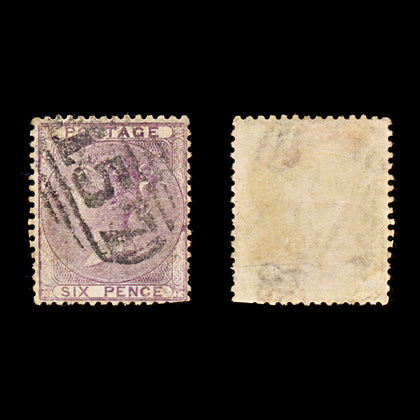
From common plates to Plate 77
Send photos for a free valuation
Email a free valuationBrowse Great Britain stamps Founder and stamp dealerLast updated June 2026