


Identification
How to Identify Queen Victoria Stamps
A Queen Victoria stamp shows the head of Victoria, as a young or older portrait, with no country name, and a denomination in pre-decimal currency (pounds, shillings and pence). Victorian stamps fall into three kinds: line-engraved (the famous penny issues), embossed (the high values), and surface-printed (the bulk of the reign). The portrait, the absence of a country name and the old currency together mark a stamp as Victorian.


At a glance
Recognising a Victorian stamp
The surest signs are the portrait and the currency. A Victorian stamp shows the head of Queen Victoria, from the youthful profile of the earliest issues to the older portrait of later ones, and it carries no country name, like all British stamps.
The denomination is in pre-decimal currency, pence and shillings, never decimal. Together these place a stamp firmly in the reign. Our guide to identifying British stamps explains how the monarch's head identifies British stamps generally.
The three kinds of Victorian stamp
Place which you have
Three quite distinct kinds
Each printed differently, and recognised differently.
Line-engraved
The famous penny issues, the Penny Black, Penny Red and Twopenny Blue, printed by engraving, with check letters in the corners.
Embossed
The handsome high values of 1847 to 1854, printed in relief so the design stands slightly proud of the paper.

Surface-printed
The bulk of the reign from 1855, in many designs and colours, including the great high values such as the £5 Orange.
See our Penny Black and Penny Red guides, and our Queen Victoria stamp values guide for what each kind is worth.
Telling Victorian from later reigns
The portrait is the deciding clue
It is easy to mistake an early twentieth-century stamp for a Victorian one, so the portrait is the deciding clue: Victoria, not Edward VII, George V or a later monarch. The style of the head, the design and the printing also help, and the currency confirms only that a stamp is pre-decimal, not which reign. Our guide to identifying British stamps lists the monarchs and their dates.
A note on value
Recognising a Victorian stamp naturally leads to the question of value. Most Victorian stamps are common and modest, while a few, the high values and certain scarce issues, are valuable. Condition matters more than age. Our guide to Queen Victoria stamp values sets out the figures.
Frequently asked questions
Look for the head of Victoria, no country name, and a denomination in pre-decimal currency. Then place it among the three kinds: line-engraved, embossed or surface-printed.
The portrait is the key. A Victorian stamp shows Queen Victoria, young or older, not a later monarch, and carries pre-decimal currency and no country name.
Line-engraved (the penny issues), embossed (the high values of 1847 to 1854), and surface-printed (the bulk of the reign from 1855).
Most are common and modest, while a few, the high values and certain scarce issues, are valuable. Condition matters more than age. See our Queen Victoria stamp values guide.
From the shop
Browse our Great Britain stamps
The Victorian era is a core part of our stock, each stamp fully described and photographed front and back.
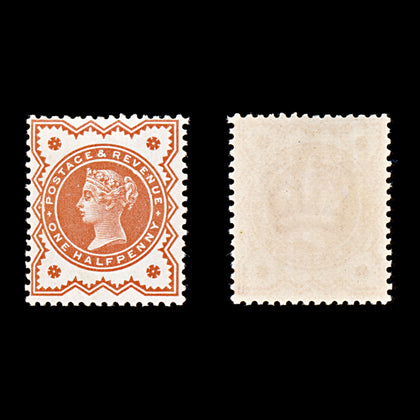
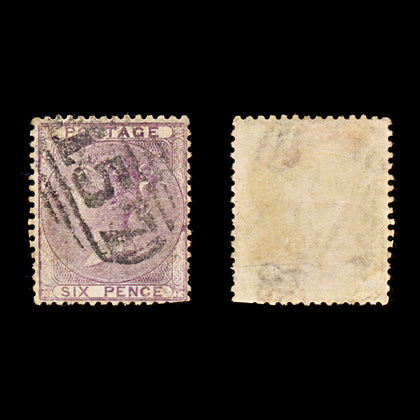
Victoria's head, pre-decimal currency
Send photos for a free valuation
Email a free valuationBrowse Great Britain stamps Founder and stamp dealerLast updated June 2026