


Identification
How to Identify British Stamps
British stamps are unique in carrying no country name. Instead, they show the reigning monarch's head, which is how you recognise them, because Great Britain issued the world's first stamp and was granted the right to omit its name. To identify a British stamp, look for the monarch's portrait or silhouette, then use the denomination, the design, the watermark and the perforation to place it in a reign and a specific issue.


At a glance
Why British stamps have no country name
It is the first thing to know, and the surest way to recognise them. Every other country names itself on its stamps. Great Britain does not, and the reason is historical: as the country that issued the world's first postage stamp, the Penny Black in 1840, it was later granted the right to identify its stamps by the monarch's head alone, rather than by a country name.
So a stamp bearing a British monarch's portrait, and no country name, is almost certainly from Great Britain. Our Penny Black value guide tells the story of that first stamp.
How to identify a British stamp
Look for the monarch's head.
A portrait or, on modern stamps, a small silhouette, with no country name, marks a British stamp.
Identify the monarch.
Which king or queen is shown places the stamp in a reign: Victoria, Edward VII, George V, Edward VIII, George VI or Elizabeth II.
Read the denomination.
The face value, in pre-decimal currency before 1971 (pounds, shillings and pence) or decimal currency after, helps date and place it.
Look at the design.
Whether a definitive head, a pictorial commemorative, or a Machin profile, the design points to the issue.
Check the watermark and perforation.
These distinguish stamps of the same design across different printings, and often decide the exact identity and value. See our guides to watermarks and perforations.
Confirm with a catalogue.
A catalogue such as Stanley Gibbons matches the stamp to its catalogue number. See how to read an SG number.
Placing a British stamp by reign
The monarch is the quickest way to date a British stamp. Victoria's stamps run to 1901, Edward VII's to 1910, George V's to 1936, the brief reign of Edward VIII in 1936, George VI's to 1952, and Elizabeth II's from 1952. Within each reign, the denomination, design, watermark and perforation narrow it to a specific issue. Our reign value guides for Victoria and George V go further.
Decimal and pre-decimal currency
A useful dating clue is the currency. British stamps before 1971 are denominated in pounds, shillings and pence, for example "2½d" for twopence halfpenny, while stamps from 1971 use decimal currency, "2½p" and the like. The change at decimalisation in 1971 is a clear dividing line, and the style of the denomination helps place a stamp on one side of it or the other.
When you are unsure
We specialise in Great Britain
British stamps include many that look alike across different printings, and the differences that matter, watermark, perforation, shade and head size, are small. If you are unsure, or think a stamp may be valuable, it is worth having it checked. We specialise in Great Britain, so send clear photographs, front and back, for a free, honest opinion.
From the shop
Browse our Great Britain stamps
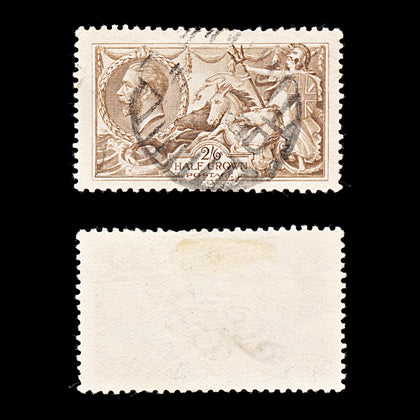
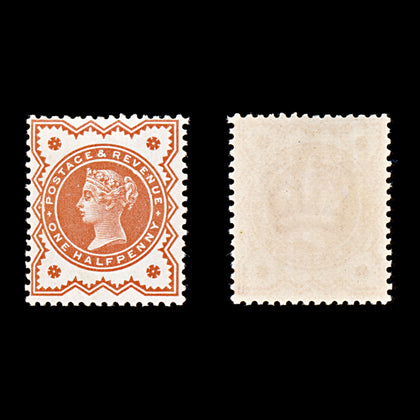
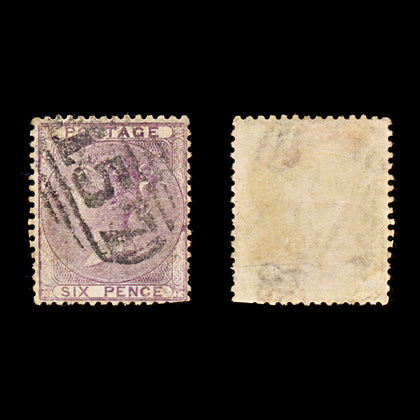
Each fully identified and described, photographed front and back.
Frequently asked questions
Because Great Britain issued the world's first postage stamp and was granted the right to identify its stamps by the monarch's head alone, rather than by a country name.
Look for the monarch's head and no country name, identify the monarch to place it in a reign, then use the denomination, design, watermark and perforation, and confirm with a catalogue.
By the monarch shown: Victoria to 1901, Edward VII to 1910, George V to 1936, Edward VIII in 1936, George VI to 1952, and Elizabeth II from 1952.
By the currency. Stamps before 1971 use pounds, shillings and pence (for example "2½d"); stamps from 1971 use decimal currency (for example "2½p").
Great Britain. It is the only country that omits its name, identifying its stamps by the reigning monarch instead.
No country name, a monarch's head
Send photos for a free valuation
Email a free valuationBrowse Great Britain stamps Founder and stamp dealerLast updated June 2026